
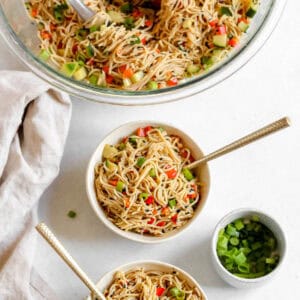
This cold sesame noodles recipe checks all my favorite plant-based boxes: easy to make, big on flavor, and fantastic as leftovers. The noodles are tossed in a savory, slightly spicy sesame sauce, then finished with crunchy cucumber and red bell pepper for freshness. You can enjoy them warm or chilled. It's the kind of recipe that works for meal prep, travels well to gatherings, and somehow disappears fast every time I serve it.
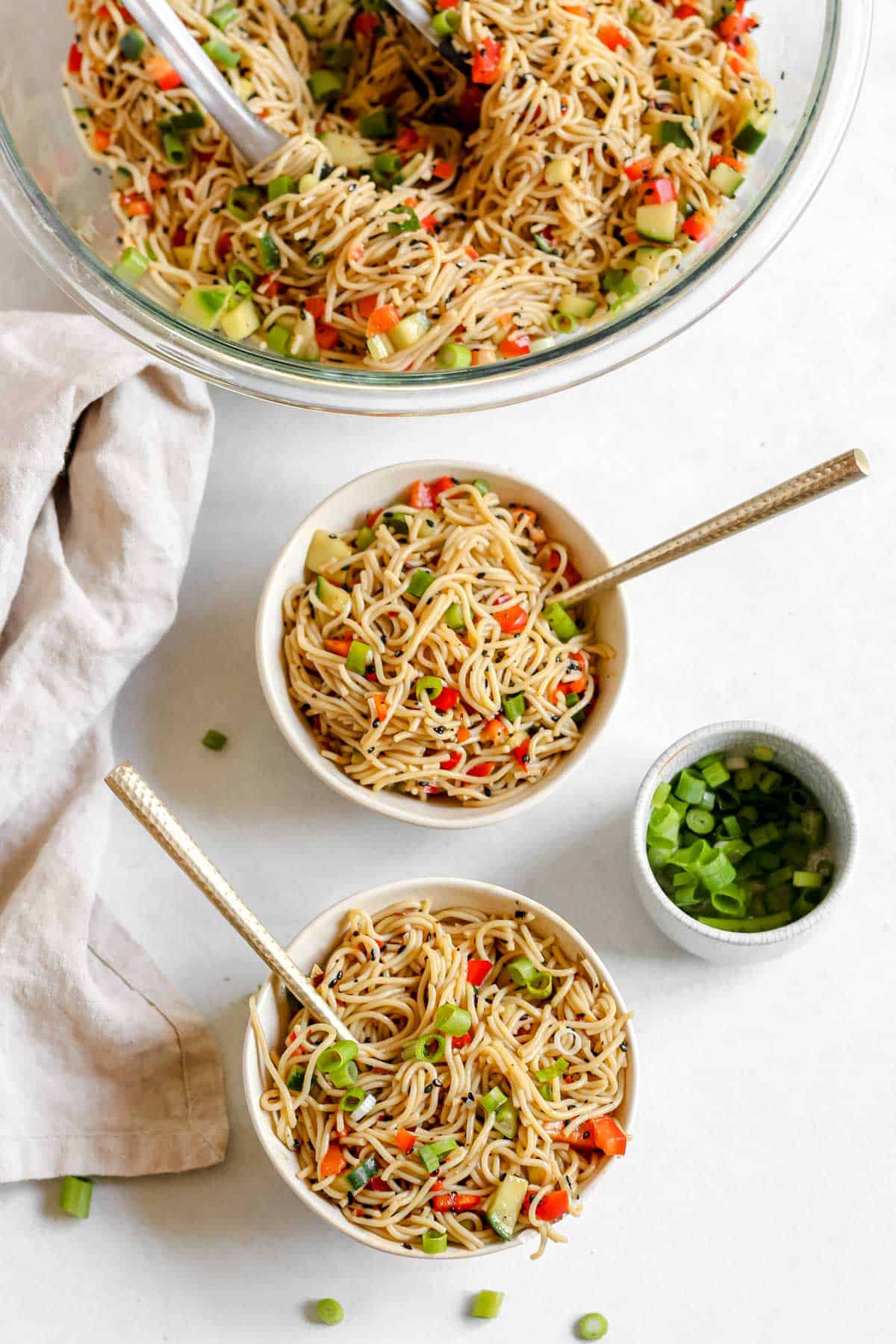
While cold sesame noodles are often enjoyed in warmer months, this plant-based dish works year-round thanks to its bold, comforting flavors. It's an easy option when you want something satisfying without spending a lot of time in the kitchen.
If you're a carb and noodle enthusiast like me, you'll be happy to know there are plenty of other pasta and noodle recipes here to check out, including:
Creamy dill pickle pasta salad
Jump to:
Ingredients
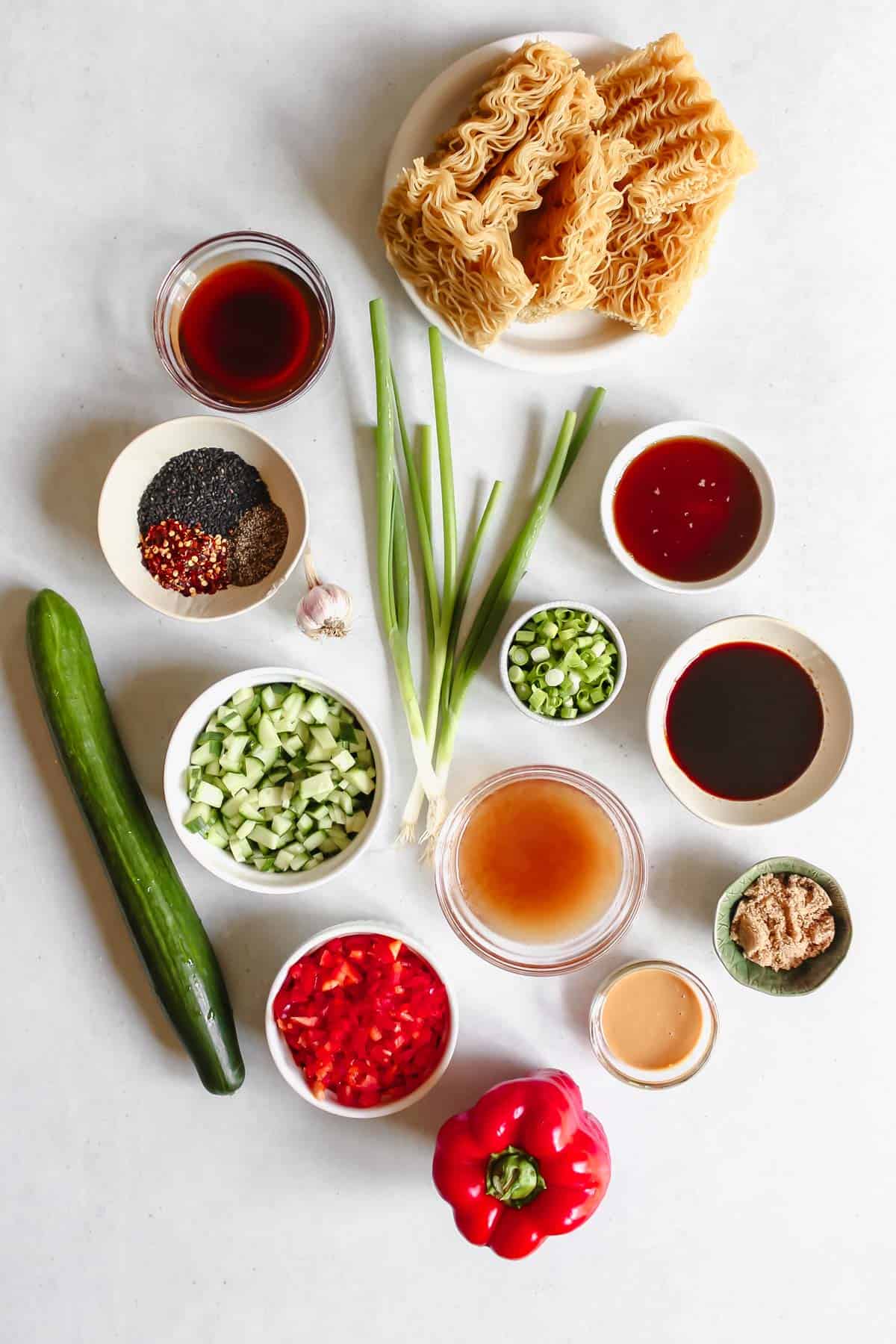
- Noodles: The base of the dish-slurpable, satisfying, and perfect for soaking up the sesame sauce. I usually use rice ramen, but this recipe is flexible and works with many noodle options (see variations below).
- Red bell pepper: Adds sweetness, color, and crunch that balances the slightly spicy, savory sauce. Red bell peppers are high in vitamin C, supporting immune function and potentially helping with iron absorption from plant foods.
- Cucumber: Brings a cool, refreshing crunch that keeps the dish light and balanced. Cucumbers are high in water and contribute to hydration, especially helpful in warm weather meals.
- Green onion (scallion): Adds a mild onion flavor and fresh bite to the dish. Green onions contain sulfur-containing compounds and flavonoids that have been studied for their antimicrobial and anti-inflammatory properties.
- Sesame oil: The backbone of the flavor-nutty, aromatic, and essential for that classic sesame noodle taste. Sesame oil is high in unsaturated fats, including linoleic and oleic acids, and contains vitamin E, lignans, and phytosterols-plant compounds linked to antioxidant and heart-health benefits
- Sesame seeds: Add a lovely crunchy texture while delivering plant compounds like lignans and phytosterols, which have antioxidant, anti-inflammatory, and heart-supportive benefits.
- Red pepper flakes: Brings the heat. Adjust to your spice preference.
- Black pepper: Adds warmth and depth, enhancing the savory flavors in the sauce.
- Garlic Adds bold, savory flavor while providing plant compounds like allicin, which have been studied for antioxidant, anti-inflammatory, and heart-supportive effects.
- Black vinegar: Adds brightness and tang that balances the richness of the sesame and peanut butter.
- Vegetable broth: Helps thin and smooth the sauce while adding savory depth without heaviness.
- Soy sauce: Supplies umami and saltiness that ties all the flavors together. (To reduce sodium without losing flavor choose a low sodium soy sauce, other options in variations below)
- Brown sugar: Just enough sweetness to balance the acidity and spice without making the dish sweet.
- Peanut butter: Makes almost everything better-including this sauce! It creates a creamy, rich, and satisfying coating for the noodles while providing plant-based protein and heart-healthy unsaturated fats that help keep you full.
See recipe card for quantities.
Instructions
Step 1: Cook the noodles Cook the noodles according to package instructions. Drain well, then rinse under cold water to stop the cooking and prevent them from sticking together.
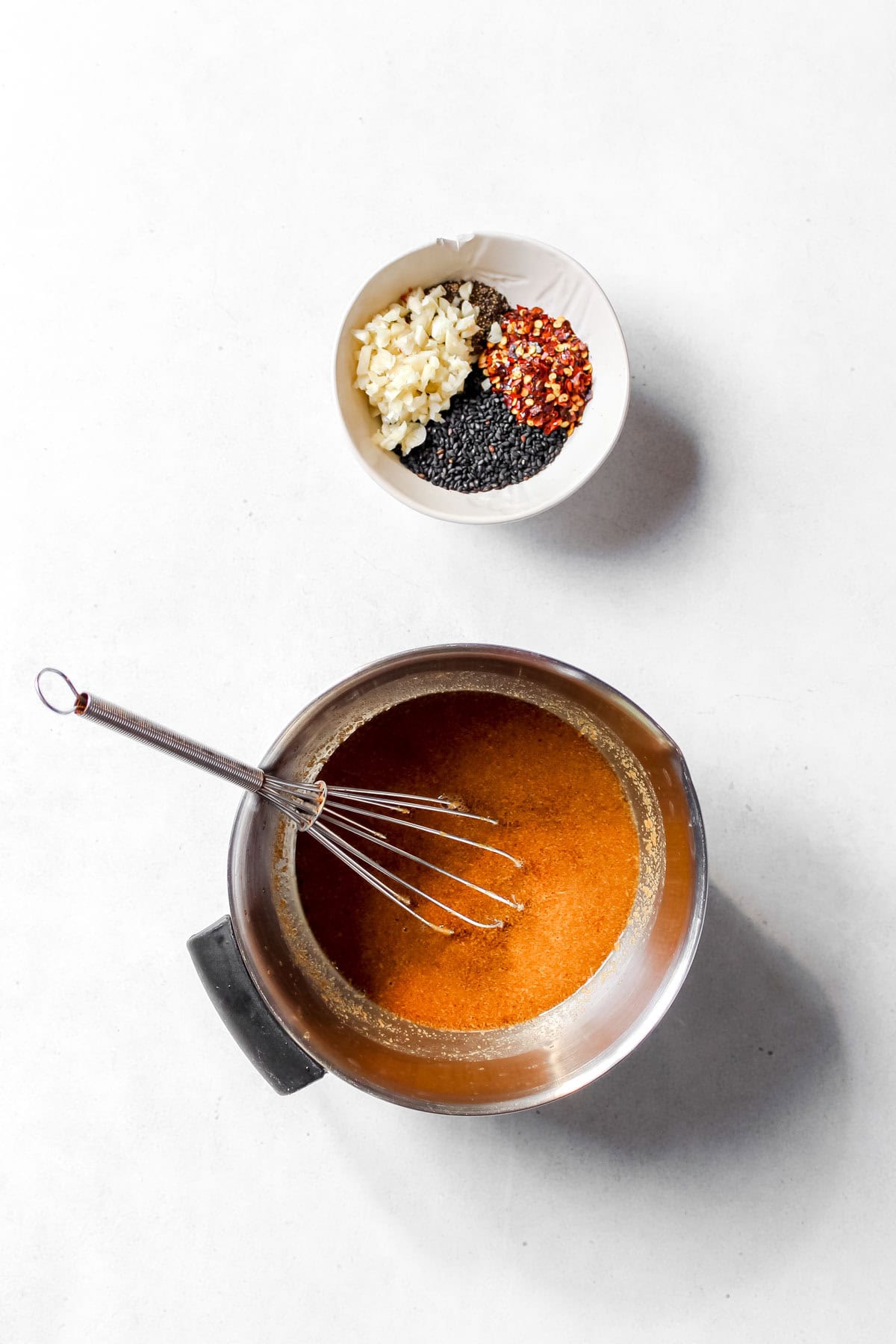
Step 2: Prep the aromatics and sauce
Measure and prep the garlic, red pepper flakes, black pepper, sesame seeds and sauce ingredients before cooking so everything is ready to go.
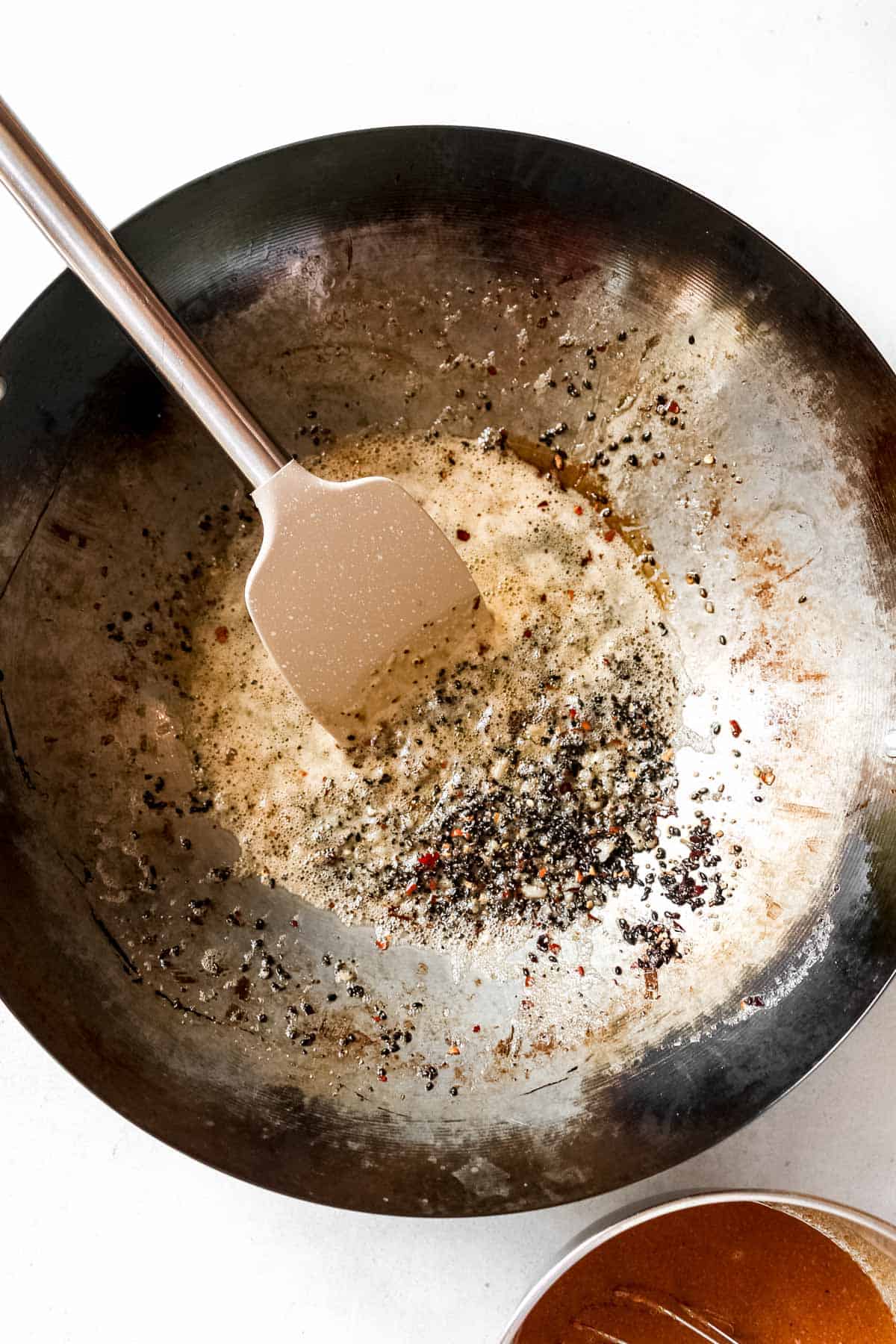
Step 3: Toast the aromatics
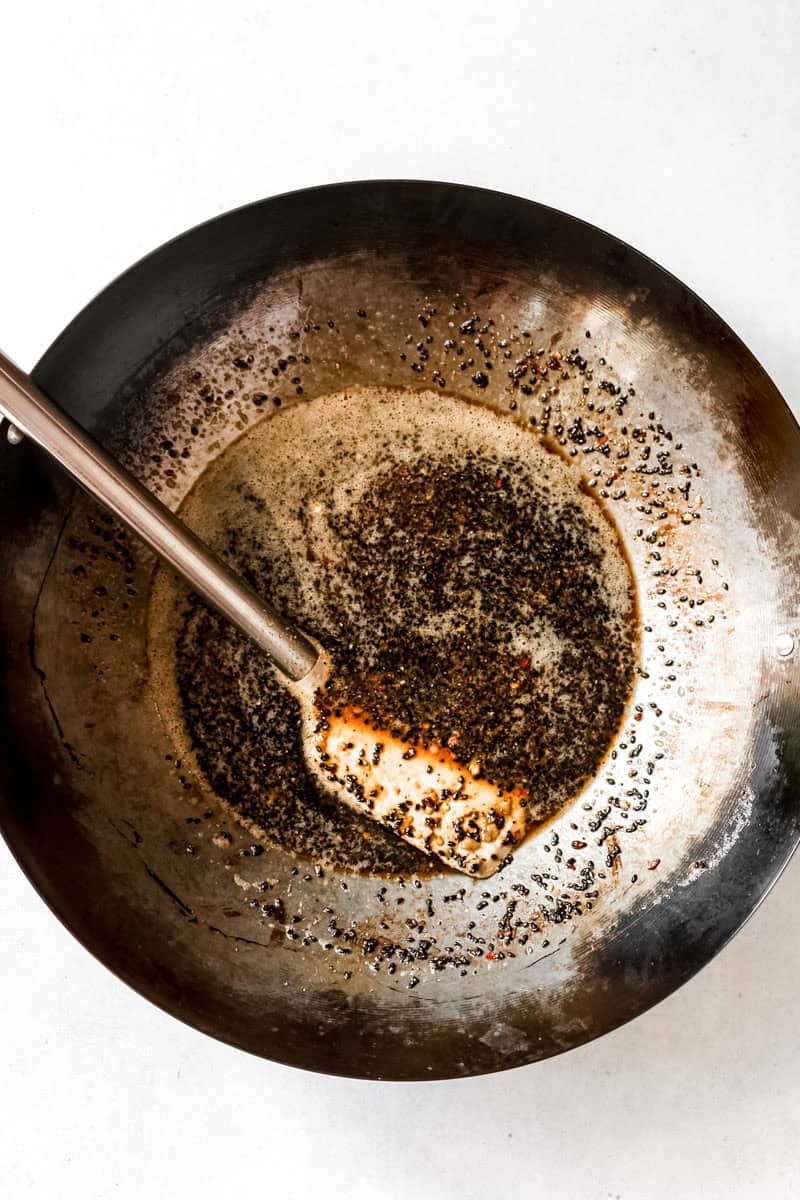
Heat sesame oil in a wok or large skillet over medium-high heat. Once warm, add the red pepper flakes, black pepper, sesame seeds, and garlic. Stir constantly for 1-2 minutes until fragrant, being careful not to let the garlic brown. Reduce heat to medium-low.
Step 4: Add the sauce
Add the black vinegar, vegetable broth, soy sauce, brown sugar, and peanut butter to the pan. Stir constantly until the peanut butter melts and the sauce is smooth and well combined.
Step 5: Toss noodles and vegetables
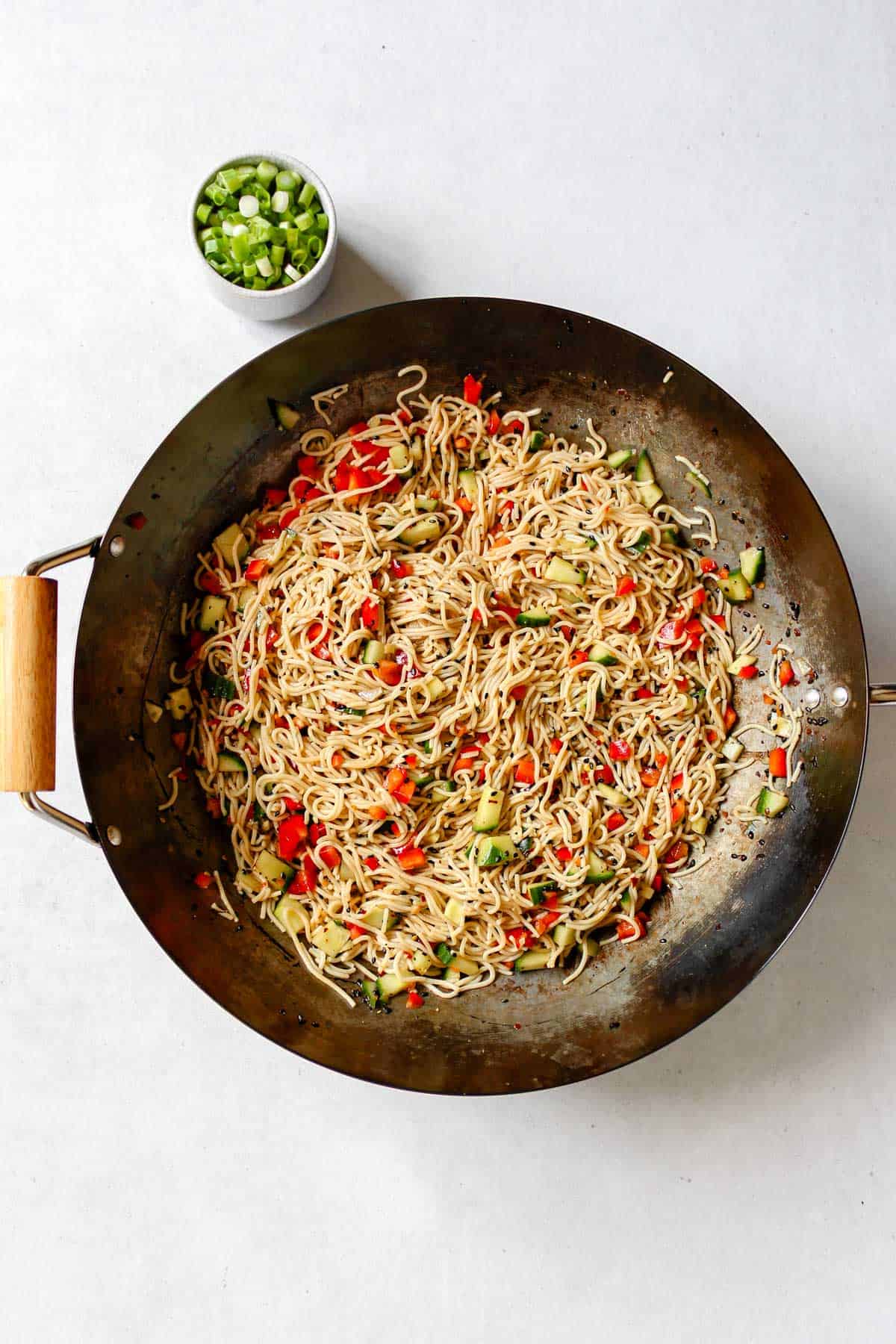
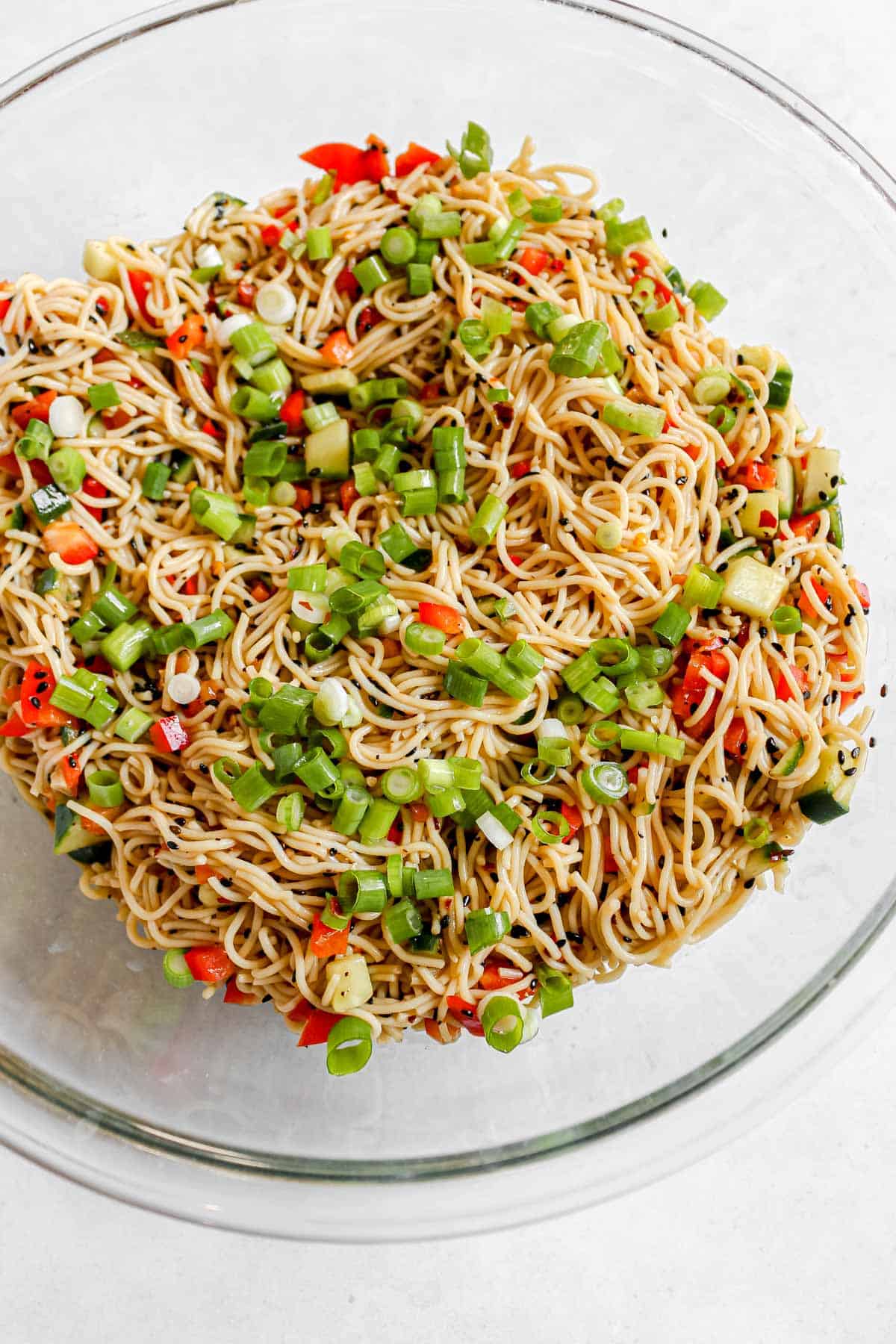
Turn off the heat. Add the cooked noodles, cucumber, and red bell pepper, to the pan. Gently toss with tongs or two forks until everything is evenly coated in the sauce. Transfer to large bowl and top with green onions.
Substitutions / Variations
- Noodles: You can swap in a variety of noodles depending on what you have on hand or the texture you prefer:
- Udon: Thick, soft, and chewy noodles with a neutral flavor that soak up sauces beautifully-perfect for rich, bold sauces like the one used in this recipe. Available in most grocery stores' Asian aisle.
- Soba: Made from buckwheat (gluten-free), these noodles have a nutty flavor and a firm bite. Dried soba usually look like dark brown spaghetti and come in bundled packages.
- Linguine or spaghetti: Regular pantry noodles work in a pinch and are great for a quick swap-they'll still taste delicious with the sesame sauce.
- Soy Sauce: You could use Tamari which is a gluten-free alternative with the same rich, savory flavor or Coconut aminos which is a gluten-free and slightly sweeter with less sodium, making it a lighter, milder option. Another option here is to use Liquid aminos which are soy-based, gluten-free, and slightly milder than regular soy sauce.
- Peanut Butter: Instead of peanut butter you could swap in a different nut or seed butter such as almond butter, sunflower seed butter or cashew butter.
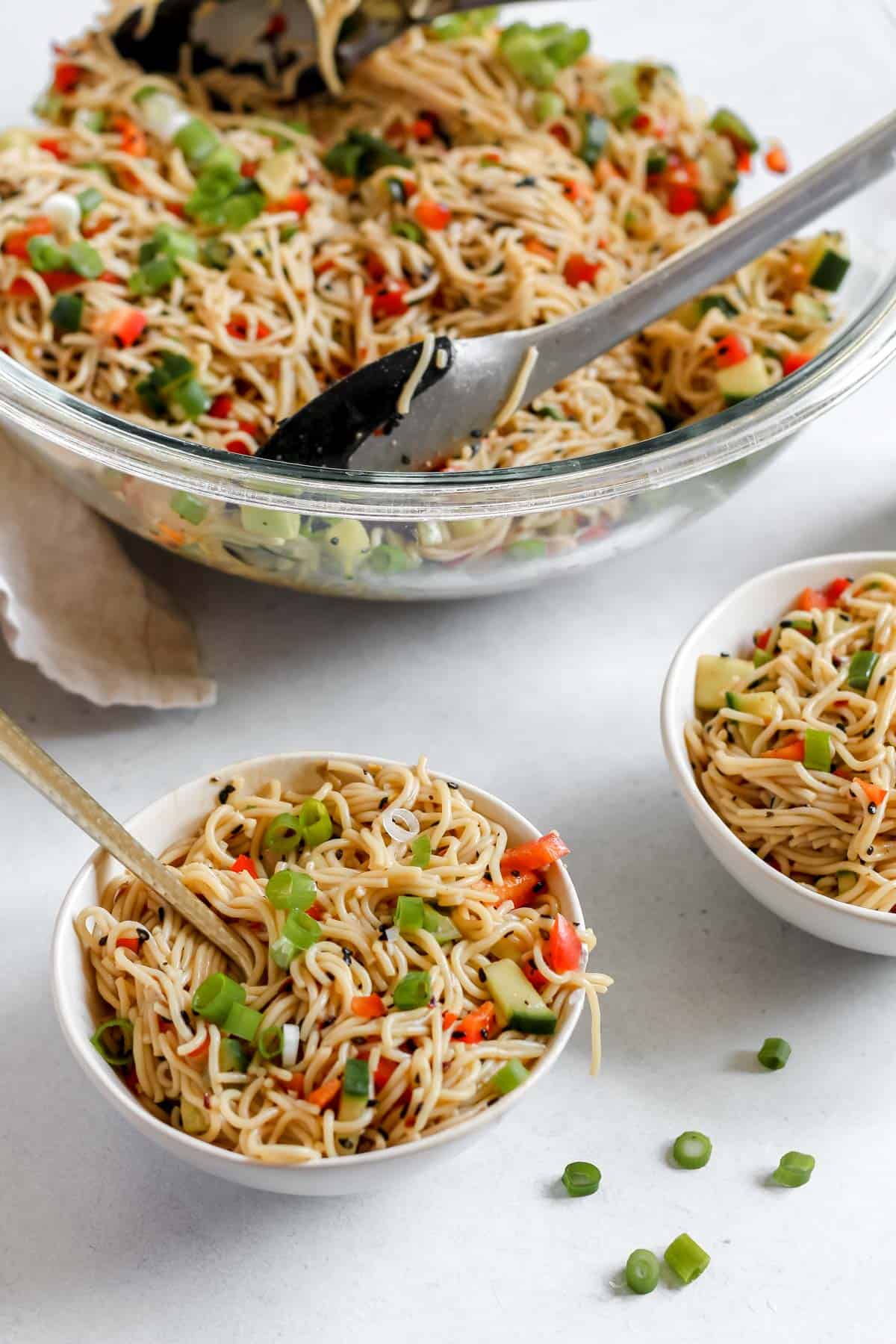
- Spicy: Skip the red pepper flakes if you don't like spicy. On the other hand, feel free to add more if you want it spicer or top with some sriracha or chili crisp.
Make It a Higher-Protein Noodle Salad
This cold sesame noodle dish is delicious on its own, but it's easy to turn it into a more filling, higher-protein meal with a few simple additions:
- Edamame: Stir in shelled edamame for a quick, no-cook protein boost and a pop of color.
- Tofu: Add baked, air-fried, or pan-seared tofu for a protein-rich option that pairs beautifully with the sesame sauce.
- Tempeh: For a heartier bite and nutty flavor, try crumbled or sliced tempeh, lightly sautéed or baked.
- Chickpeas: A pantry-friendly option that adds protein, fiber, and extra texture-roasted chickpeas work especially well for crunch.
These additions make the noodles more satisfying and help turn them into a balanced, meal-prep-friendly salad that holds up well in the fridge.
Equipment
I use a large carbon steel wok for this recipe because it's lightweight, durable, heats evenly, and has developed a naturally non-stick surface with proper seasoning. The shape and heat conductivity make it perfect for tossing noodles and vegetables in the sauce.
You can use any large non-stick skillet or sauté pan you have.
Storage
Keep the noodles in an airtight container in the fridge for up to 3-4 days.
These recipe doesn't stand up well to freezing.
FAQ
Yes! Use tamari instead of soy sauce, and choose gluten-free noodles such as rice noodles, soba (100% buckwheat), or shirataki noodles
Yes! These noodles actually taste better after sitting in the fridge for a few hours, making them perfect for meal prep or potlucks.
Absolutely! While they're often served chilled, they're delicious warm too.
Related
Looking for other plant-based recipes? Try these:
Pairing
These dishes pair well with this recipe:
Cold Sesame Noodles Recipe
Ingredients
Noodles
- 12-16 ounces Noodles cakes, (I use 6 rice ramen cakes = 15 oz)
Toasting Aromatics
- ⅓ cup Sesame oil
- 8 cloves Garlic, chopped
- ¼ cup Sesame seeds
- 2 tablespoons Red pepper flakes
- 1.5 teaspoons Black pepper
Sauce:
- ½ cup Vegetable broth
- ⅓ cup Black vinegar
- ⅓ cup Soy sauce
- 2 tablespoons Brown sugar
- 2 tablespoons Peanut butter
Vegetables
- 1 Red bell pepper, diced
- 1 Cucumber, chopped
- 2-3 Green onions, thinly sliced (use both white and green parts)
Instructions
- Cook the noodles: Bring a large pot of water to a rolling boil. Add the noodles and cook according to the package directions. Drain in a colander, then rinse with cold water to stop the cooking. Set aside.
- Heat the oil and spices: Heat sesame oil in a wok or large skillet over medium-high heat. Once the oil is warm, add the red pepper flakes, black pepper, sesame seeds, and garlic. Stir constantly for 1-2 minutes, just until fragrant (do not let the garlic brown). Lower the heat to medium-low.
- Make the sauce: Add the black vinegar, vegetable broth, soy sauce, brown sugar, and peanut butter to the pan. Stir until the peanut butter melts and the sauce looks smooth and well combined.
- Add noodles and vegetables: Turn off the heat and add the cooked noodles, cucumber, and red bell pepper. Use tongs or two forks to gently toss until evenly coated in the sauce. Transfer to a bowl.Alternate method: If your pan isn't large enough, transfer the noodles to a large bowl. Pour the sauce over the noodles, add the cucumber and red bell pepper, and toss until well combined.
- Chill or serve: Top with green onions. Refrigerate and serve cold, or enjoy warm right away.
Notes
References:
Kim SH, Yoon JB, Han J, et al. Green Onion (Allium fistulosum): An Aromatic Vegetable Crop Esteemed for Food, Nutritional and Therapeutic Significance. Foods. 2023;12(24):4503. Published 2023 Dec 16. doi:10.3390/foods12244503
Arimboor R, Natarajan RB, Menon KR, Chandrasekhar LP, Moorkoth V. Red pepper (Capsicum annuum) carotenoids as a source of natural food colors: analysis and stability-a review. J Food Sci Technol. 2015;52(3):1258-1271. doi:10.1007/s13197-014-1260-7
Wei P, Zhao F, Wang Z, et al. Sesame (Sesamum indicum L.): A Comprehensive Review of Nutritional Value, Phytochemical Composition, Health Benefits, Development of Food, and Industrial Applications. Nutrients. 2022;14(19):4079. Published 2022 Sep 30. doi:10.3390/nu14194079
Ansary J, Forbes-Hernández TY, Gil E, et al. Potential Health Benefit of Garlic Based on Human Intervention Studies: A Brief Overview. Antioxidants (Basel). 2020;9(7):619. Published 2020 Jul 15. doi:10.3390/antiox9070619
Thanks for coming! Let me know what you think: